


Y’hello, Beastie!
No, you didn’t dream. The thumbnail of this blog post has exactly the same title as the thumbnail of another post shared back in April 2025. And yes, the topic is the same. Food is indeed medicine.
On January 2025, at my annual physical, I was told that I was prediabetic. That was one of the scariest news in my life, I am telling you! Diabetes runs in my family. I have lost family members to it. While I am not afraid of dying, I don’t want to die from something that I can prevent. So, after I received the news, I made a few changes. I drafted a nutrition and exercise plan for myself, one that I would follow for 12 weeks as a starter. And I did. It was tough but I did. And I also had great results, which were all detailed in this article, in case you missed it.
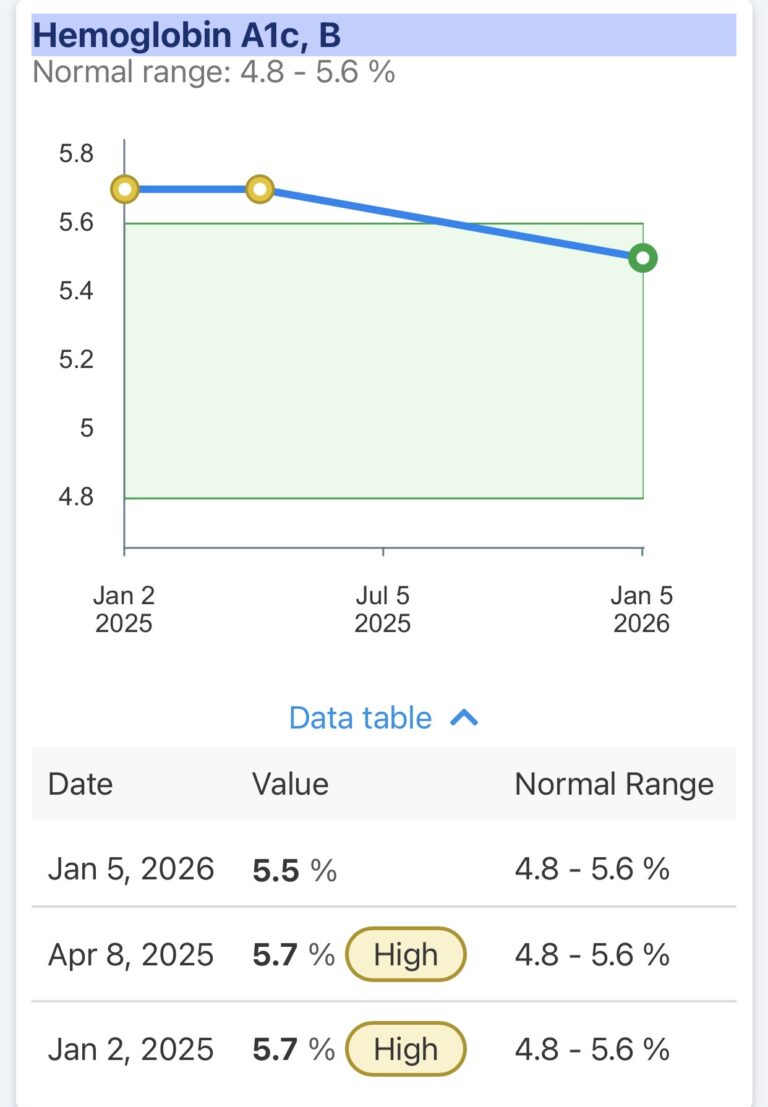
Long story short, almost all my markers went down, all but one: my A1C. In short, the A1C measures the blood sugar levels, or glucose levels, over the past 2 to 3 months. A normal percentage is below 5.7; prediabetes is between 5.7% to 6.4%; diabetes is above 6.5%.
While all other markers went down in the normal ranges, my A1C remained at 5.7% between January and April. It was bitter-sweet for me. But I had made the decision to continue what I was doing because it was working.
What I did not account for was that in the following weeks, I would be sent on second shift working hours, and I remained there for the next four months. Things became harder. You see, second shift is a different beast. It throws everything off, and it did for me. Instead of waking up at 2:30am for my 4am workout sessions, I would wake up at 6am for 8am workout sessions. I would start work at 12pm until 10:30pm. Generally, my bedtime is 7pm. Because of all those habits being thrown off, my eating habits followed. Being awake past my bedtime also brought in cravings and even hunger. So, I started with chips, and moved to sandwiches with chips and anything I could put my hands on. I would go home to crash and a lot of the time, I would stay awake longer and eat more. That’s how things started to slide. Then, it also started to affect my mental.
After two weeks on a 4×10 second shift where I would work for 10 hours for four days per week, I moved to a 3×12 shift where I would work 12 hours for 3 days each week. While that sounds good on paper, in reality that is a brutal shift. It did not make things better for me. Instead, I had to adjust. Now, I had to change my training regimen. And I did. Because I was working Tuesdays through Thursdays, I made Sundays to Tuesdays my primary training days. On Sundays and Mondays, I would train a minimum of two hours, maximizing those sessions and utilizing them for the bigger muscles. As to Tuesday, this is when I would be okay with a one-hour-maximum gym session because this is when I would train my chest and arms.
After the four months on that mad shift, I came back to my regular shift. What remained was the training split that I adopted while on the 3×12 shift. But my nutrition was never back to where it was back in April. And that was frustrating. It is easy to say I could just go back. But reality is different.
You cannot change when you are not ready for change. And with all the stress at work and then my health that also took a hit for a few months, I felt I was losing ground.
Fast forward to January 2026. I had another blood draw for my annual physical. The results came in a day or two later, and all my markers were in the healthy range. All of them. Yes, all, including the A1C! How did that happen?
The changes I made
Remember, I said that my nutrition was never back to what it was from January to April. Back then, I had a meal plan that I was following. After April it all changed. When I got back to my regular shift, obviously it was difficult to get back to normal functioning hours. My entire system was all messed up. And I mean inside and outside. For instance, it would take me months to get back to a somewhat decent sleeping pattern.
Despite never being back on a proper meal plan, there are a few things that I did that tipped the scale in my favor. I added more fruit to my diet. Blueberries, blackberries, strawberries, raspberries, bananas. I would have these almost everyday with homemade yogurt or Greek yogurt, and oats & honey granola, topped with chia seeds. A yogurt bowl for dinner, almost daily. Or I would have that meal as a post workout meal.
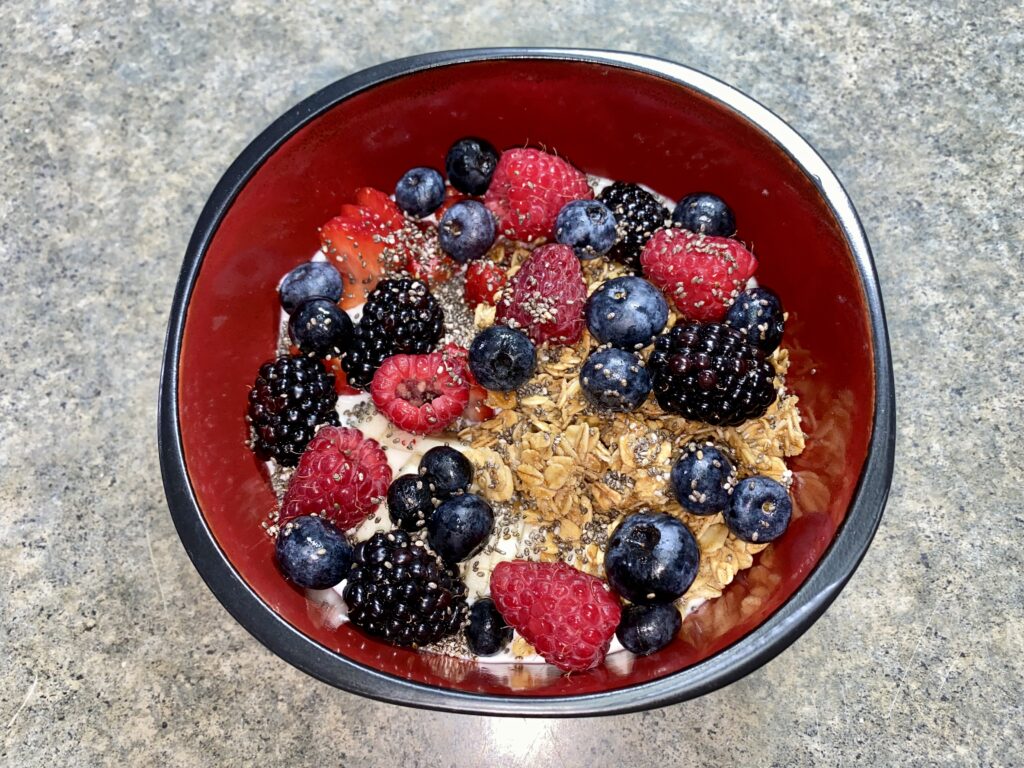
Berries are high in fiber, which slows how fast sugar enters your bloodstream, and they help your body use insulin more efficiently instead of letting sugar hang around in your blood. They also help calm inflammation, which plays a big role in blood sugar problems. When eaten on a regular basis, berries help keep your blood sugar more stable day after day. That steady control is what lowers A1C over time.
Bananas provide fiber and potassium, and when portioned and combined properly, they can support satiety and consistency rather than cause spikes. They were not the star of blood sugar control the way berries were, but in a structured meal, they helped make my nutrition sustainable, and sustainability is what allows the A1C to come down.
Chia seeds are extremely high in soluble fiber, which forms a gel in the gut and slows how quickly carbohydrates are absorbed. That means less blood sugar spiking after meals. Chia seeds also help with fullness, making it easier to stay consistent without grazing or overeating, which matters more than people realize when it comes to A1C.
I thought I was overdoing it with soda, but what I was actually drinking were sugar-free options like Sprite Zero and berry sparkling water. They contain no sugar and do not raise blood glucose, so they did not negatively impact my A1C. They helped me stay hydrated and consistent without adding hidden carbohydrates.
Fasting showed up in my journey as well, but not as a strategy or something I was intentionally trying to do. There were days when I barely ate, not because I was chasing results, but because disordered eating has been part of my history. Those low-intake days may have reduced overall glucose exposure simply because less food was coming in, which can affect A1C on paper. This is not something I recommend or consider a healthy tool, however. Long periods of under-eating can worsen blood sugar regulation, hormones, and mental health. Improved A1C only matters when it comes from nourishment, consistency, and a healthier relationship with food.
Overall, I stopped tracking my intakes the way I usually do, and would just eyeball my quantities. And many days I would overeat. But the quality of what I had for food mattered more than the quantity. Do not get me wrong. I am still a number girl, and I still do track my meals, weigh them, use MyFitnessPal, etc. But at the time, doing all that took the back seat.
What I learned
In those 8 months, I went through a lot. That reflected in my cholesterol. Foods higher in saturated and trans fats, poor sleep, chronic stress. All combined contributed in raising my cholesterol, even if it is still in the healthy range. The same way quality nutrition and better structure helped bring my A1C down, dialing those factors back in is likely what will bring those cholesterol numbers back down as well.
But in terms of reducing my A1C, I also learned a few things.
I learned that I did not need keto to bring my A1C down. Quality mattered more than extremes, and how foods were combined mattered more than cutting entire food groups. Consistency beats intensity every time. Sprite Zero and berry sparkling water are not soda in the way people assume, and while moderation still mattered, they did not sabotage my blood sugar the way sugar-sweetened drinks would have.
I also learned that how I trained mattered more than how often. Three intentional workouts per week, with two heavy sessions, did more for my blood sugar than five rushed one-hour workouts ever did. That said, I was not sedentary outside the gym. I walk a lot at work, and in the last two months of the year I added regular salsa dancing, about four hours per week, and capoeira once a week for an hour and a half. That consistent, enjoyable movement added up metabolically without feeling like punishment.
Most importantly, I learned that improved numbers only mean something when they come from sustainable habits. Less food was not the answer. Better structure, better pairing, better recovery, and less stress were. My A1C came down without perfection, punishment, or restriction, and that is what made the progress real.
What’s next
After everything I have been through, I did expect my A1C to be higher than what it was back in April 2025. So, I decided to get back to what I did last year. I drafted a nutrition and exercise plan for myself, and decided to start it on the week of January 5, a 12-week plan. Basically, I am following the BEAST Fit plan. While my A1C is still in the normal range, at 5.5% I am not entirely out of the woods just yet. It is also true that diabetes runs in my family. Because of that, I have no expectation of my A1C to ever be below 5%. But it is still my responsibility to keep it in the normal range for as long as possible. I also want to reduce my cholesterol a bit. So, I am back on a controlled plan. The way it works is that I calculate the numbers to stay within based on my level of exercising: my daily calories, protein, fat, and carbs. Thanks to Evolution Nutrition, which comes with all my plans, I know what to eat. Every week, I go on the app, enters my preferences based on the numbers that I calculated for myself, and pick a meal plan that aligns with that goal. Then, I go grocery shopping, prep the meals, and voila!
You too can join me on that journey. You don’t have to start with exercising right away. As a matter of fact, for anyone who has been sedentary for a while, I recommend starting dialing in their nutrition first before we can introduce exercising. BEASTS Nutri 12 is the perfect plan to start. It is also my most popular plan, the one that most people I have worked with go for. 12 weeks of nutrition and meal planning. And if you want to sample my services before committing to three months or longer, BEASTS Nutri 21 is the best option. Right now, I am also running a special. You can get The New Year Reset Recipe Bundle. The bundle combines the high-protein recipe bundle, the low-carb recipe bundle, the 5-ingredient recipe bundle, and the smoothie recipe bundle, all in one. This pack has 60 delicious easy-to-make meals that will help you reach your goals, including reducing your own A1C. Don’t wait any longer. This deal won’t last long.
Last but not least, let’s keep connected. Follow me on Instagram and Facebook, where you can tag me for me to come cheer you up on your own journey!
I am exciting for the next few months. Like last year, I would like to bring back tracking my A1C every 3 months. So, the difference between this time and last year at this time is the physical activities on the table. They are great activities, that I love. Let’s see what happens to my markers in three months.
Stay tuned, Beastie.
Train mean.